
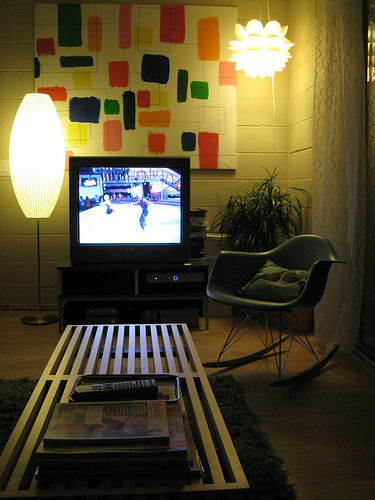

The atmosphere inside your home or office can have a great effect on your frame of mind. Subtle changes in decoration and even lighting can also do a lot to the overall ambiance of your space. This is where layered lighting comes in. This approach can be used to enhance all of your light fixtures in order for you to work more efficiently, apart from creating shadows and accent illuminations that will all improve either your home or business environment.
Why Should You Use Layered Lighting?
Opting for the light layer approach has several benefits. For one, this will allow you to accentuate certain items or areas in your home. Second, having layered lights will make it easier for you to use lights separately. For instance, you could turn off ambient lights if you are using task lights, which will be discussed below. Hence, when using layered lighting, you save energy. You can also be economical by buying LED and fluorescent lights instead of less efficient varieties.
Types of Layers
In using the light layer approach to augment the appearance of a certain area, you are going to use different kinds of light fixtures that are classified into specific kinds of “layers”, such as the ambient or overall layer, accent layer, task layer, focal layer, and decorative layer.
- Ambient Layer
The ambient layer provides illumination to an entire space and the lighting it offers ensures that you can easily do your tasks or walk to rooms without your sight being hampered by darkness. So, ambient lighting provides the most light to a certain place, yet this should be soft or muted so that the effects of other layers will still be noticeable. If ambient lighting is high, an entire area will be very bright.
- Accent Layer
The accent layer, also known as the focal layer, gives illumination to certain pieces inside your home that you want to highlight. Artworks or sculptures, and other kinds of centerpieces and even decorative heirloom pieces can be emphasized with elegantly positioned accent lights.
- Task Layer
A task light is one that helps illuminate an area where you could be doing something, like studying or working. Examples of task lights are vanity lights, as well as table and desk lamps. It is very important to get your task layer right because this will have an effect on the work that you have to do. Task lights are often very bright. In order to save energy, you can turn off the ambient layer when your task lights are on.
- Decorative Layer
A perfect example of a light fixture that provides a decorative layer is a chandelier. Though it can produce some illumination, a decorative light might not be enough to efficiently light up an area. So, it needs to be combined with either an ambient or task layer. Another option is to add other forms of illumination, such as recessed lights or cove lights. Using too many decorative lights, however, should be avoided as this can result in the “Swiss cheese” effect. Ceilings with several holes are called as such.
Citations:
Featured images:
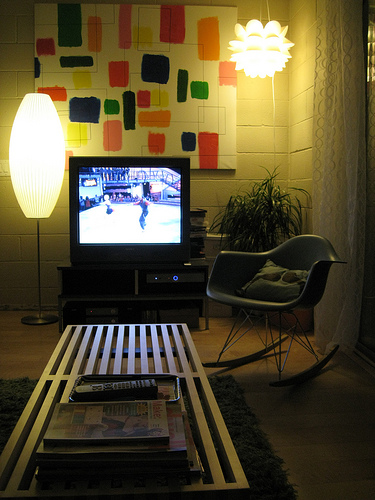 License: Creative Commons image source
Claire Neely is a full-time freelancer who has many interests, such as home improvement and interior design. Click here to read more about these topics.

 Purple Base Color - Tri-Color Representations
 Yellow Base Color - Tri-Color Representations
 Red Base Color - Tri-Color Representations
 Pink Base Color - Tri-Color Representations