


Reading camera tutorials, tips and tricks can be confusing if you don’t understand the terminology. Luckily, photography terminology is surprisingly simple to grasp. Take the time to familiarise yourself with these five terms to get yourself started.
Depth of Field
Depth of field is how much of a photograph is in-focus. In a photo with a large depth of field, also called deep focus, objects in both the foreground and background are clear. Most landscapes have a large depth of field. A photo with a shallow depth of field, such as a portrait, will have a sharp focal point while the rest of the image is fuzzy.
Aperture
Aperture, also called the f-stop, controls the amount of light let in when a picture is taken. It is to your camera what your pupil is to your eye, adjusting the hole in the lens opening to let more or less light in. On a DSLR camera, aperture is expressed as “f/x,” where “x” is a number. Notably, a smaller number indicates a larger aperture and more light allowed in. For example, f4 is a larger aperture than f18. Aperture has an enormous impact on depth of field. A large aperture, such as f1, will produce a very shallow depth of field. A small aperture, such as f22, increases the depth of field. Wider apertures are used in macro and portrait photography. Smaller apertures are used in landscapes and very bright conditions.
Shutter Speed
Shutter speed is how quickly the camera shutter, which allows light in to hit the lens and light senors, opens and closes. While aperture largely affects image sharpness, shutter speed can affect how much colour and detail is visible in an image. A slow shutter speed is desirable in low-light conditions or for photography techniques like light painting. The camera should be held very still to keep the photo from being blurry. Fast shutter speeds are necessary to capture crisp photos of objects in motion and are best in good light conditions.
ISO
ISO represents a film or digital camera sensor’s sensitivity to light. The higher an ISO value, the more sensitive the sensor or film is. High ISO exposures need less light to capture detail but will be grainier. They are needed for faster shutter speeds. Low ISO exposures require bright light but will have low to no graininess. ISO stands for “International Organization for Standardization,” referring to the organisation that sets film and light sensor standards.
Macro
Macro photography is a popular photo technique of capturing minute details, be it textures, small subjects or true-to-live images. Truly spectacular macro shots require magnification lenses to get truly spectacular shots. If your digital camera has a “macro mode,” that setting allows your camera to use greater magnifications and extremely close focusing depths.
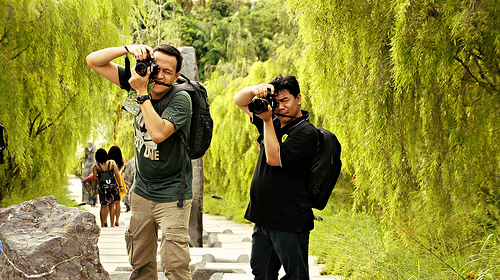
By: epSos .de
Mick, is a photojournalist with a newspaper in his home town. He believes a photograph is the most powerful part of a news article and is never without his trusty digital camera. Mick also enjoys chess and going to the beach with his two dogs.



 Purple Base Color - Tri-Color Representations
 Yellow Base Color - Tri-Color Representations
 Red Base Color - Tri-Color Representations
 Pink Base Color - Tri-Color Representations